MIS Bunion Surgery
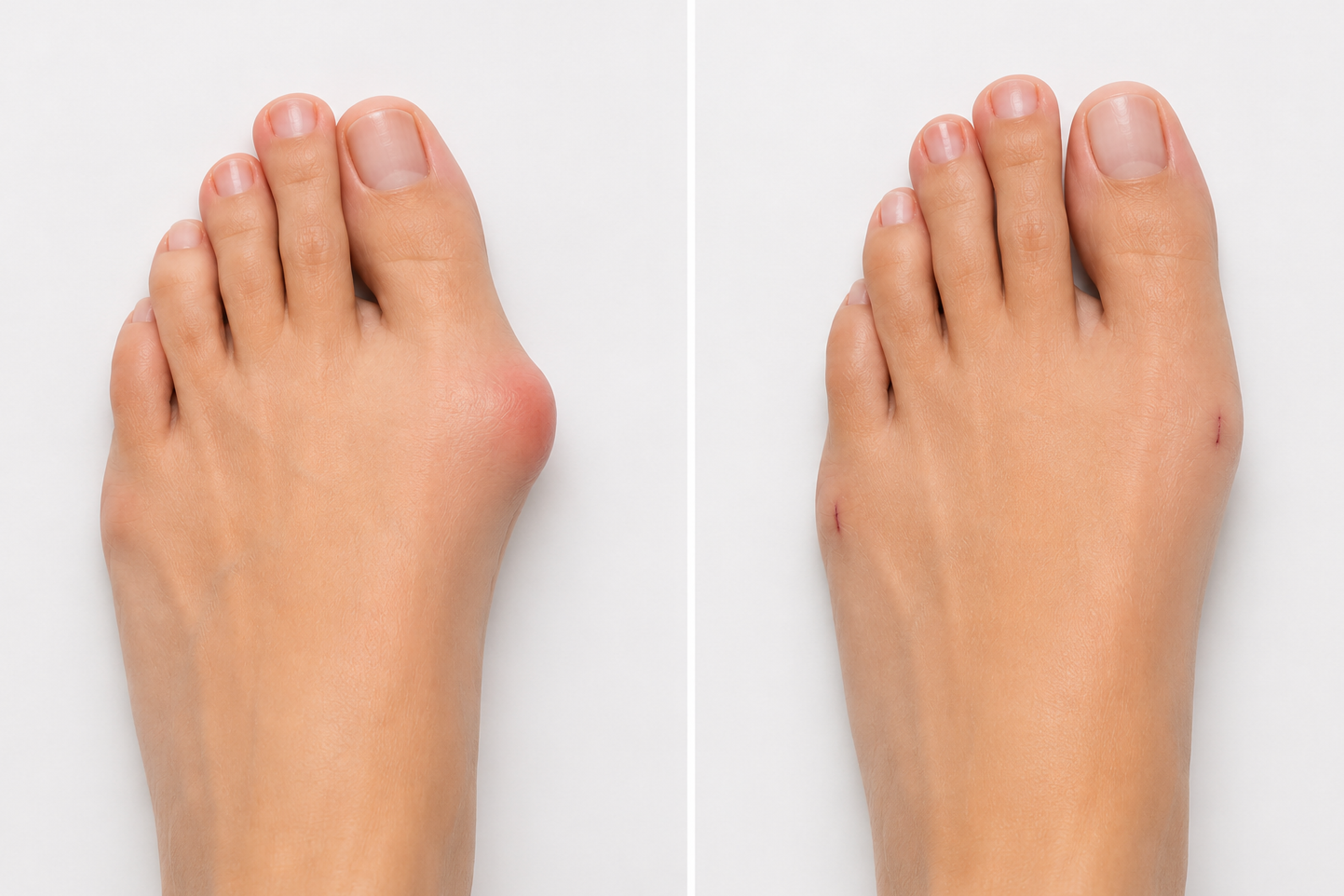
Minimally invasive bunion & bunionette surgery
Living with bunion or bunionette pain doesn’t have to mean months of recovery or an
extended time off your feet.
At Vertex Foot and Ankle specialists, Dr. Dustin Rilling now offers
minimally invasive bunion and bunionette surgery — a modern, precise approach that
corrects the deformity through tiny incisions, with less disruption and a faster return to
your normal life.
What is minimally invasive bunion surgery?
Traditional bunion surgery requires a large incision, significant soft tissue disruption,
and often a lengthy recovery. Minimally invasive surgery (MIS) achieves the same bone
correction through small, keyhole-sized incisions using specialized instruments guided
by real-time X-ray imaging.
The result is the same structural correction — with a fraction of the trauma to
surrounding tissue.
Benefits of MIS over traditional surgery
• Smaller incisions — typically less than 5mm
• Less post-operative pain and swelling
• Reduced scarring
• Faster return to walking and normal footwear
• Lower risk of infection
• Performed in-office or outpatient — no hospital stay required
• Real-time digital X-ray guidance for precision
Is MIS right for you?
Minimally invasive bunion surgery may be appropriate if you:
• Have a painful bunion or bunionette that has not responded to conservative
treatments (orthotics, wider footwear, padding)
• Want to avoid the prolonged recovery of traditional open surgery
• Are looking for a less invasive surgical option with equivalent correction
Dr. Rilling will evaluate your foot structure, imaging, and medical history to determine if
MIS is the right approach for you. Not every bunion requires the same treatment — a
personalized consultation is the first step.
What to expect
Before surgery
Dr. Rilling will take digital X-rays in-office to assess the degree of deformity and confirm
you are a candidate for the minimally invasive approach. You’ll receive detailed pre-op
instructions tailored to your procedure.
During the procedure
The procedure is typically performed under local, light sedation or general anesthesia.
Using small, specialized instruments and real-time fluoroscopic (X-ray) guidance, Dr.
Rilling precisely realigns the bone through incisions smaller than a centimeter. Most
procedures take about an hour.
Recovery
Most patients are walking the same day in a surgical shoe or walking boot. Recovery
timelines vary depending on the severity of the bunion, but many patients return to
regular footwear within 4–8 weeks. Dr. Rilling will provide a personalized recovery plan
and follow-up imaging to ensure proper healing.